What Is Shrinkflation? Paying More for Less
By The Ask Shopi Team · 3 min read
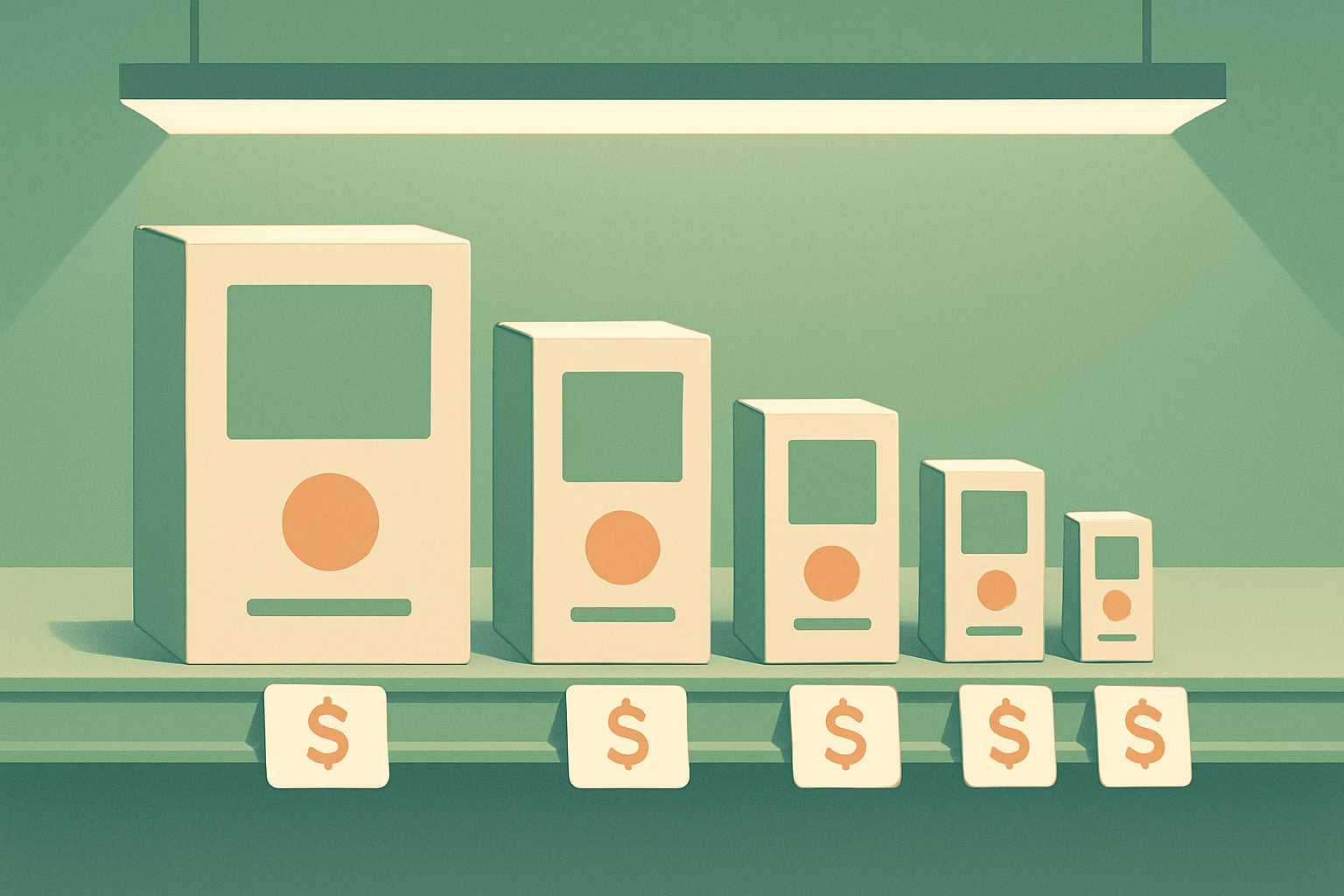
Shrinkflation is when a product's size or quantity shrinks while the price stays the same — a hidden price increase disguised as the same old package. You pay the same $4.99, but the bag now holds 12 ounces instead of 16. The sticker price didn't budge, so it doesn't feel like a hike — yet your cost per ounce just went up.
The word blends "shrink" and "inflation." It's a common, real tactic across groceries, household goods, snacks, and toiletries. Brands often prefer trimming the contents over raising the shelf price because shoppers notice a bigger number far more than a slightly smaller box. Because the price tag looks familiar, the change can slip past even careful shoppers.
Why shrinkflation matters
It matters because it makes honest comparison harder and chips away at trust. Over time, paying more for less quietly stretches your budget with no single moment where you chose to spend more. A few reasons it stings:
- It's hard to see. Packaging is often redesigned at the same time, so "new look!" can quietly mean "less product."
- It compounds. Several small downsizings over a year can add up to a large effective price increase.
- It rewards the sticker, not the value. If you shop by the price on the front, you can end up paying more per unit without realizing it.
Shrinkflation isn't lying, exactly — it's incentives at work. Companies face pressure to protect margins, and shrinking the package is a less visible lever than raising the price. Understanding the incentive is more useful than getting angry at any one brand.
How to spot shrinkflation
The single best defense is simple: compare the unit price (price per ounce, per 100g, per sheet, per load), not the sticker price.
- Check the unit price tag. Most shelf labels show a small "price per ounce/100g" — that's the number that actually matters.
- Do the math when it's missing. Divide price by quantity: $4.99 ÷ 12 oz ≈ $0.42/oz, versus the old $4.99 ÷ 16 oz ≈ $0.31/oz.
- Read the net weight, not the box. A taller, slimmer box can hold less. Look at the ounces, grams, or count.
- Note counts and "servings." Fewer sheets per roll, fewer chips per bag, fewer loads per detergent jug.
- Keep a rough baseline for staples you rebuy often, so a change jumps out.
How honest comparison fits in
Shrinkflation is one example of a bigger truth: the way a product is framed isn't always the way it actually serves you. The same logic shows up online, where rankings and "deals" can be shaped by who's paying. We dug into one version of that in our look at whether best-of lists are affiliate links, and at the broader playbook in how to shop online without getting manipulated.
Shopi is built to put the real "why" in front of you, not the marketing. We earn nothing when you buy — no affiliate links, no ads, no commissions — so a recommendation has no reason to push the bigger-looking package over the better value. Every result comes with a plain "why this is for you" plus a relevance score, and outbound links are neutral. That's the whole idea behind why we're different.
A quick shrinkflation checklist
- Shop by unit price, not sticker price.
- Re-check staples you buy on autopilot.
- Treat "new packaging" as a prompt to read the net weight.
- Compare across brands and sizes — the bigger box isn't always cheaper per unit.
You can't stop shrinkflation, but you can stop paying for it blindly. A two-second glance at price-per-ounce is usually all it takes.
Want recommendations that explain the real value, not the packaging? Try a free search whenever you're curious.
Frequently asked questions
What is shrinkflation in simple terms?
Shrinkflation is when a product gets smaller — fewer ounces, sheets, or units — while the price stays the same. Because the sticker price doesn't change, it's a hidden price increase: you're paying the same money for less product, which raises your cost per unit.
How do I spot shrinkflation?
Compare the unit price (price per ounce, per 100g, per sheet, or per load) instead of the sticker price. Read the net weight rather than judging the box size, and keep a rough baseline for staples you rebuy so a downsizing stands out.
Is shrinkflation illegal?
Generally no. As long as the net weight or count is accurately labeled, reducing package size while keeping the price is legal in most places. It's a marketing and pricing choice, which is exactly why checking the unit price yourself is the best defense.
What's the difference between shrinkflation and inflation?
Inflation is a visible rise in the listed price. Shrinkflation keeps the listed price the same but reduces what you get, so the price-per-unit rises without an obvious sticker change. Both increase your real cost; shrinkflation is just harder to notice.