Garmin
Garmin Forerunner 265
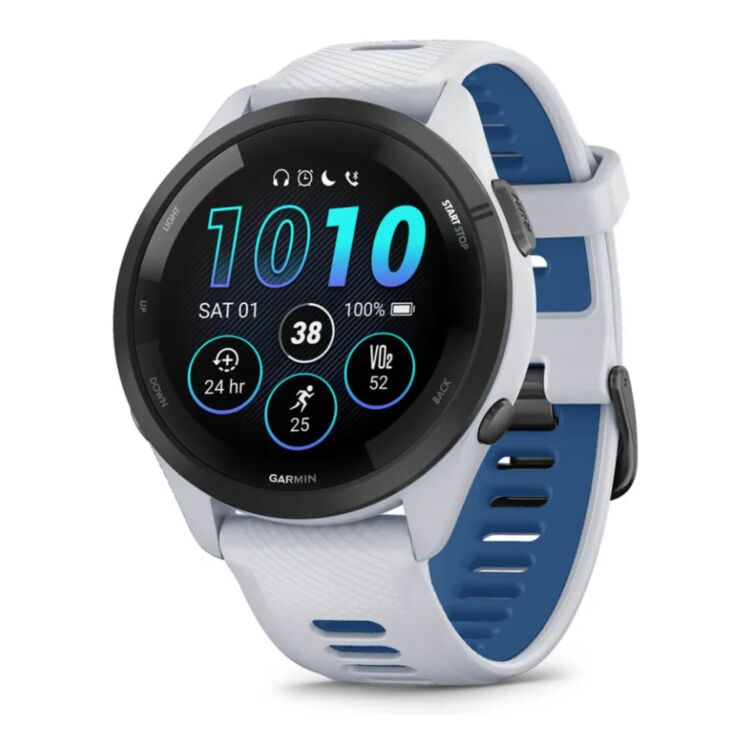
The Garmin Forerunner 265 is a mid-range GPS running watch with an AMOLED display, aimed at dedicated runners who want detailed training analytics without stepping up to the premium Forerunner 955 or Fenix line.
# Garmin Forerunner 265
## Overview The Garmin Forerunner 265 is a mid-range running and multisport smartwatch designed for runners and cyclists who want detailed training metrics without the premium price tag of flagship models. It combines GPS tracking, comprehensive fitness analytics, and everyday smartwatch features in a compact design available in two sizes.
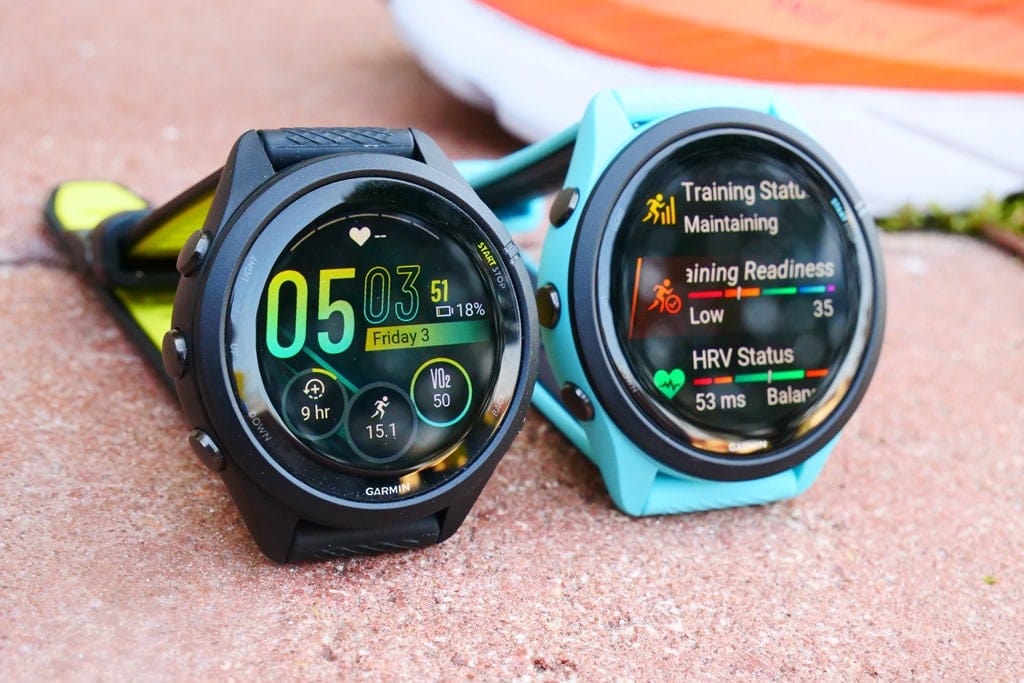
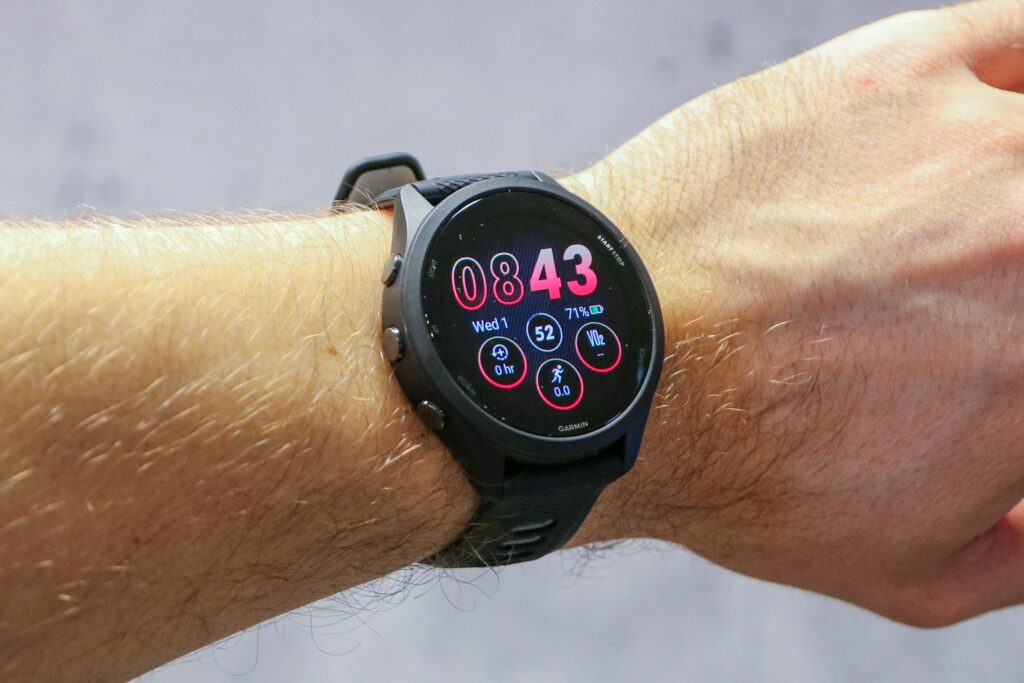
## Standout Features - **AMOLED Display** — Bright, vibrant color screen that's easier to read in sunlight compared to older LCD models, with always-on capability - **Advanced Running Metrics** — Includes VO2 max estimation, training load balance, recovery time suggestions, and race predictor functionality - **Cycling-Specific Data** — Tracks cycling dynamics, power metrics (with compatible sensors), and provides cycling-focused training insights - **Built-In Maps** — Preloaded maps for navigation during runs and rides; supports turn-by-turn directions - **Multi-GNSS Support** — Uses GPS, GLONASS, and Galileo for improved accuracy in challenging environments - **Training Load & Readiness** — Analyzes workout intensity and recovery to suggest when you're ready for hard efforts or need easier days - **Long Battery Life** — Up to 11 days in smartwatch mode; approximately 20 hours with GPS active - **Multisport Capability** — Supports running, cycling, swimming, and triathlon modes with sport-specific metrics - **Sleep & Stress Tracking** — Monitors sleep stages and provides stress level insights throughout the day - **Smart Notifications** — Receives calls, texts, and app alerts directly on the watch
## Who It's For The Forerunner 265 is ideal for **dedicated runners and cyclists** who want serious training analytics without the complexity or cost of ultra-premium models. It's particularly well-suited for athletes training for races who benefit from metrics like VO2 max, training load balance, and recovery recommendations. It's also a good fit for **multisport athletes** (triathletes) who need reliable tracking across multiple disciplines.
## Important Considerations
**Display Trade-offs** While the AMOLED screen is a major upgrade from previous Forerunner models, it does consume more battery power than traditional LCD displays. The always-on feature, while convenient, will reduce battery life compared to using the display on-demand.
**Maps Are Basic** The watch includes preloaded maps for navigation, but they're more functional than feature-rich. If you're accustomed to detailed topographic maps or complex route planning, you may find the on-watch mapping somewhat limited. Most users pair this with their phone for detailed route planning.
**Power Metrics Require Sensors** Advanced cycling metrics like power output require compatible external sensors (power meter, cadence sensor). The watch itself doesn't measure power directly — it estimates it based on other data if sensors aren't connected.
**Accuracy Varies** GPS accuracy is generally good but can be affected by dense tree cover, urban canyons, or poor satellite geometry. VO2 max estimates are based on algorithms and personal data, not direct physiological measurement — they're useful for tracking trends but not clinical measurements.
**Learning Curve** The Forerunner 265 offers substantial training data and insights. Getting the most from features like training load balance and recovery recommendations requires some familiarity with how Garmin interprets this data. The companion Garmin Connect app is essential for deeper analysis.
**Limited Customization vs. Flagship Models** Compared to the Forerunner 965 or Epix, this watch has fewer customizable data fields and watch faces. If you want highly personalized displays, you may feel constrained.
**Smartwatch Features Are Basic** While it handles notifications well, it lacks features like contactless payments, music storage, or advanced app ecosystems that some competitors offer. It's primarily a fitness watch that happens to be smart, not a smart device that tracks fitness.
**Size Matters** Available in two sizes (42mm and 46mm). The 42mm is more compact but may feel small for larger wrists; the 46mm is chunkier. Try both if possible before buying.
---
**Bottom Line:** The Forerunner 265 is a solid choice for runners and cyclists who prioritize training analytics and reliability over cutting-edge features or premium design. It delivers meaningful insights at a reasonable price point, though it works best when paired with the Garmin Connect app for full benefit.
Key features
- Cycling metrics
- VO2 max
- training load
- maps
- long battery
Seen at 3 retailers from $329.99 to $449.99 as of 2026-03-09. Prices change — check the retailer for the current price.
A serious training tool that brings AMOLED clarity to the Forerunner line without sacrificing the metrics that matter.
What stands out
- Bright AMOLED touchscreen offers excellent readability in varied light conditions
- Comprehensive training analytics including VO2 max, training load, and recovery time give serious runners actionable data
- Multi-sport and cycling metrics broaden its appeal beyond pure running
- Long battery life for a watch with an AMOLED display, holding up well across multi-day use
What to weigh
- Mapping is present but more basic than Garmin's premium Fenix or Epix tiers — not a full navigation device
- The AMOLED display, while a strength, does draw more power than MIP alternatives under heavy GPS use
- Wrist-based heart rate has the same accuracy ceiling as most optical sensors — chest strap still preferred for precision training
Great fit if
- Runners tracking structured training who want detailed load and recovery metrics
- Athletes moving between running and cycling who need multi-sport data in one device
- Those upgrading from a basic GPS watch who want a proper AMOLED screen
Skip it if
- Hikers or trail users who need robust turn-by-turn navigation — the mapping here is limited
- Battery-first users who prioritise weeks of life over screen quality
- Casual exercisers who won't use the depth of training analytics on offer