Personalized vs. Targeted: The Private AI Shopping Assistant Difference
By The Ask Shopi Team · 6 min read
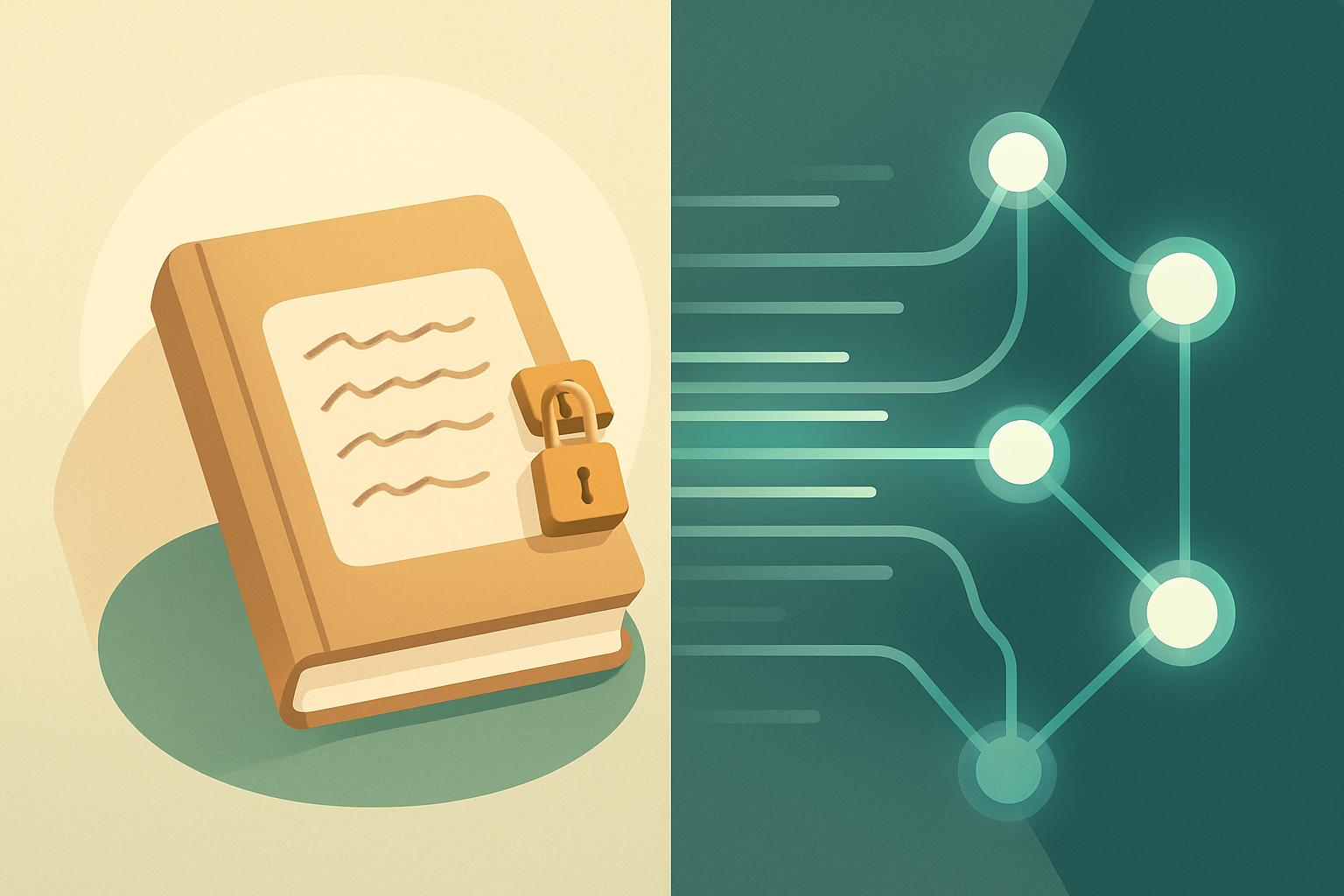
Two shopping tools can ask you the same questions — your size, your budget, the brands you keep coming back to — and then do opposite things with the answers. One uses them to help you find something good. The other uses them to sell you something, or to sell you to someone else. That gap is the whole ballgame, which is why "personalized" and "targeted" don't mean the same thing. If you're deciding whether to trust a private AI shopping assistant with your taste and your data, the first useful question is which of those two jobs it's quietly doing.
The good news: once you can see the difference, you can't unsee it. And it usually comes down to one thing — who pays.
Personalized vs. targeted: the difference in plain English
Personalization means a tool adapts to you in service of your goal. You want quiet running shoes for flat feet under $120, and it narrows the world down to exactly that. The profile it builds — your sizes, your values, your hard "no"s — exists to make its advice better for you. Ideally, you can see that profile, edit it, and delete it whenever you like.
Targeting means your behavior becomes the product. Your clicks, dwell time, and purchase history get bundled, scored, and often shared or sold so someone can aim an offer at you — or pay to jump the line in your results. The "personal" part is real. The goal just isn't your goal. It's conversion.
Here's the tricky bit: both can feel identical from the couch. A targeted ad for the "perfect" jacket and a genuine recommendation for the same jacket look the same on screen. The difference isn't in the output. It's in the incentive behind it — and in what happens to your data afterward.
Why this got urgent in 2026
For years this was a slow-burn privacy debate. Then AI shopping agents went mainstream, and the stakes jumped.
A 2025 YouGov survey found that about 43% of US adults are aware of AI shopping assistants but only around 14% have actually used one. Trust is the bottleneck: in the same research, only about 46% of shoppers said they "fully trust" AI recommendations, and most still verify before buying. People are curious, not naive.
They're right to be careful, because the newest tools don't just suggest — they act. When an assistant can hold your preferences, remember your budget, and even start a checkout on your behalf, the question "what does it do with my data?" stops being abstract. An agent that knows everything about you is wonderful when it works for you, and a real problem when it quietly works for whoever's paying it.
The tell is always the incentive
You rarely have to guess a tool's motive. You can usually read it straight off the business model. A few honest examples:
- Affiliate reviews. Wirecutter is a genuinely careful, well-respected reviews operation — and it runs on affiliate commissions, typically around 6–10% of a sale. That doesn't make its picks wrong; good editors build firewalls between the money and the verdict. But the model still rewards a purchase happening, which is a slightly different finish line than you being happy a year later.
- Checkout fees. When OpenAI added shopping research and Instant Checkout to ChatGPT in late 2025, it introduced a roughly 4% fee charged to participating merchants. That's a reasonable way to fund a product. It also means there's now money attached to where you buy.
- Ads and data. The oldest model of all: the recommendations are free because you are the inventory. Your profile is the asset being monetized.
None of these are evil. They're incentives, and incentives shape recommendations — gently, often invisibly, but reliably. If you want the longer version of who funds what, we wrote a whole piece on how the big AI shopping tools are funded. The point isn't "never trust anyone." It's "know who's paying, and read the advice through that lens."
This matters more than usual right now because the raw material — reviews — is shaky on its own. USF researchers estimate that a large share of online reviews, on the order of a third, may be unreliable or fake. The US FTC even banned fake and incentivized reviews in a 2024 rule. When the inputs are noisy, the incentives behind the filter matter even more.
Questions to ask before you trust a private AI shopping assistant
You don't need to be a privacy lawyer. You need five questions. If a tool can't answer them clearly, that's your answer.
- How does it make money? If recommendations are free, find the revenue. Ads, affiliate links, checkout fees, or data sales all create a pull. A flat subscription you pay for is the rare model where the tool's only customer is you.
- Can I see, edit, and delete my profile? Real personalization is transparent. If you can't view the data it holds on you — or delete it on demand — it isn't really your profile.
- Does it sell or share my data? Look for a plain-English answer, not a 40-page policy. "We never sell or share your data" should be a sentence, not a scavenger hunt.
- Does it tell me why it picked something? A trustworthy recommendation shows its reasoning — "you said quiet and under $120, this fits" — instead of just crowning a winner.
- Does it push me toward a specific store? A neutral tool helps you decide what to buy and leaves where to buy entirely up to you. A monetized one nudges the checkout.
If you want to go deeper on why trust, not technology, is the real constraint here, this connects to the broader trust gap in AI shopping.
What genuinely private personalization looks like
This is exactly the line we tried to draw when we built Shopi, so here's the honest version — incentives and all.
Shopi is a private AI shopping assistant with no affiliate links, no ads, no sponsored placements, and no commissions. It earns nothing when you buy anything; the only revenue is an optional premium subscription. That's deliberate. It means the tool's incentive is to give you advice good enough that you'd happily keep using it — not to route you toward whoever paid the most.
A few specifics that follow from that one choice:
- Your profile is yours. Shopi builds a picture of your taste, budget, and values automatically as you search, save, and chat — no long forms — and you can view, edit, or delete any of it anytime. It never sells or shares your data.
- Every pick explains itself. Recommendations come with a transparent "why this is for you" and a relevance score, so you can judge the reasoning rather than just the result. (It's AI — it can be wrong. Sanity-check the things that matter.)
- It doesn't touch the transaction. When you're ready to buy, Shopi points you straight to the product's page rather than a specific retailer. It has no stake in where you spend.
If the philosophy interests you more than the feature list, why Shopi is different and the story behind it lay out the reasoning without the sales gloss.
The bottom line
Personalization and targeting will keep looking alike on the surface. The difference lives underneath, in who the tool actually works for. Ask how it's funded, whether you control your data, and whether it shows its reasoning — and the help-versus-manipulation line gets clear fast.
If that principle resonates, Shopi is built on exactly it. You can try a real personalized search in demo mode without signing up — same engine, a sample profile — and decide for yourself. The free plan stays free (10 searches a month), and the only thing we're optimizing for is whether the advice was actually any good.
Frequently asked questions
What is the difference between personalized and targeted shopping?
Personalization adapts to you to serve your goal — finding the right product — and the profile it builds exists to make its advice better for you. Targeting turns your behavior into a product: your data is scored, shared, or sold so someone can aim an offer at you or pay to rank higher in your results. They can look identical on screen; the difference is the incentive behind the recommendation and what happens to your data afterward.
Is a private AI shopping assistant safe to give my data to?
It depends on the tool, not the label. A genuinely private assistant lets you see, edit, and delete your profile, states plainly that it does not sell or share your data, and earns money in a way that doesn't depend on where you buy (for example, an optional subscription rather than ads or affiliate fees). If a tool can't clearly answer how it's funded and whether you control your data, treat that as your answer.
How can I tell if an AI shopping tool is selling my data?
Start with the business model. If the service is free, the revenue has to come from somewhere — usually ads, affiliate commissions, checkout fees, or data sharing. Then look for a plain-English data policy: a trustworthy tool will say 'we never sell or share your data' in a sentence, not bury it in dozens of pages, and will let you delete your data on demand.
Are affiliate review sites like Wirecutter bad?
No. Wirecutter is a careful, well-respected reviews operation, and many affiliate sites do honest work with editorial firewalls. The point isn't that affiliates are evil — it's that the affiliate model rewards a purchase happening, which is a slightly different goal than your long-term satisfaction. Knowing the incentive just helps you read the advice with the right context.
Does Shopi sell my data or use affiliate links?
No. Shopi has zero affiliate links, zero ads, zero sponsored placements, and zero commissions, and it earns nothing when you buy. Its only revenue is an optional premium subscription. It never sells or shares your data, you can view, edit, or delete your profile anytime, and it links you directly to the product's page rather than to any specific retailer.
Sources
- YouGov: AI shopping assistants are catching on, but shoppers still need convincing (2025)
- OpenAI: Buy it in ChatGPT — shopping research and Instant Checkout (2025)
- Ahrefs: Wirecutter SEO case study (affiliate model)
- University of South Florida: study on fake online reviews (2025)
- US FTC: rule banning fake and incentivized reviews (2024)