How to Choose Running Shoes (No Affiliate Spin)
By The Ask Shopi Team · 7 min read
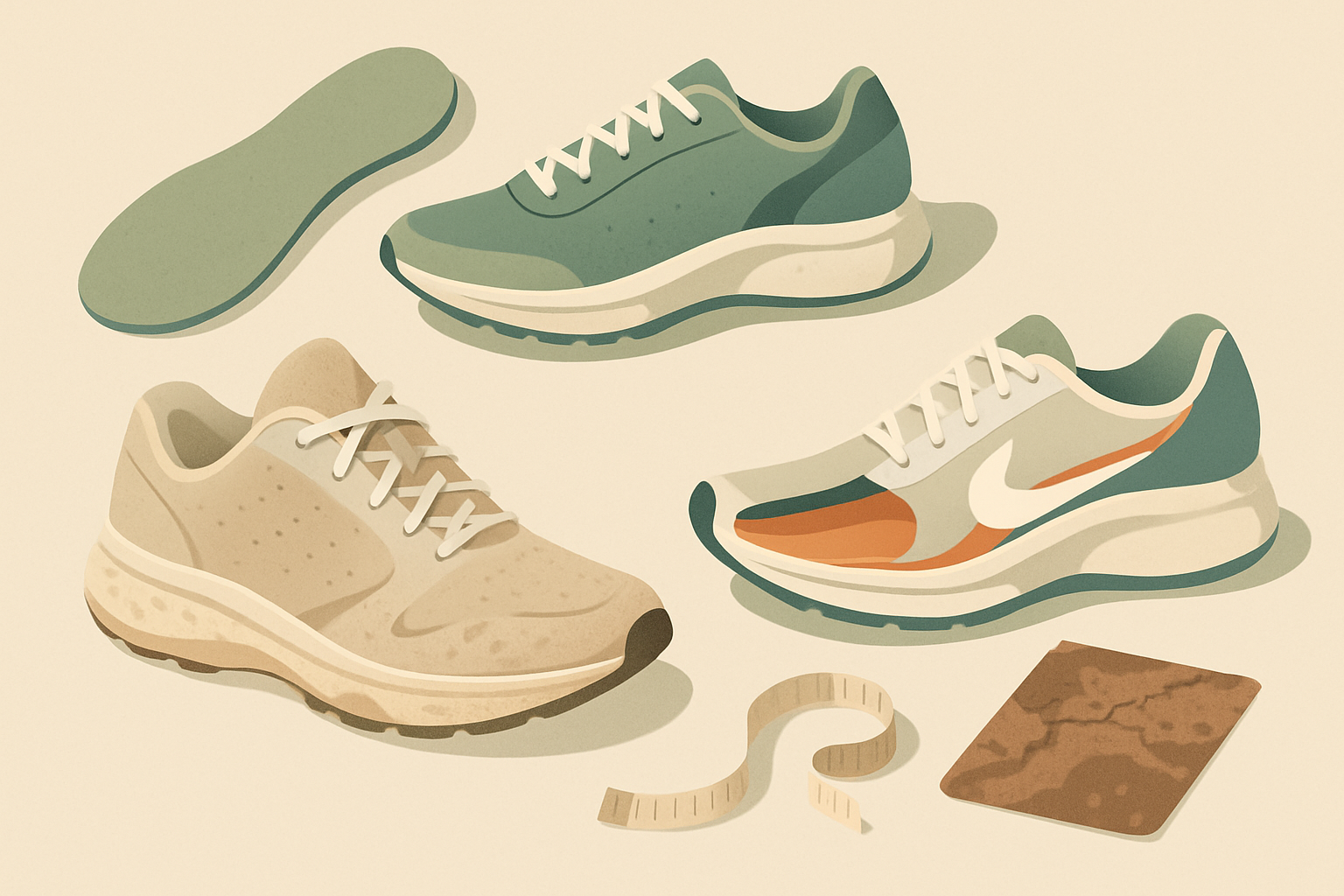
Figuring out how to choose running shoes shouldn't require a sports-science degree — or an impulse buy chasing whatever a "best of" list ranked first this week. The honest truth is that the right pair is the one that fits your feet, your stride, and the running you actually do — not the one with the biggest marketing budget behind it. A lot of shoe advice online is quietly shaped by who gets paid when you click "buy." This guide skips that. It hands you the decision framework — use-case, fit, cushioning, gait, and replacement timing — so you can walk into any store or search box knowing exactly what to look for.
Start with how (and where) you actually run
Before anything else, picture your typical run. A shoe built for fast intervals on a track is a different animal from one made for slow weekend miles or muddy trails.
A few honest questions to ask yourself:
- Surface: Mostly pavement, treadmill, or trails? Trail shoes add grippy lugs and protection you don't need on roads — and that grip feels clumsy on smooth surfaces.
- Distance and pace: Easy daily miles reward comfort and durability. Race-day or speed shoes chase lightness and "pop," often trading away cushioning lifespan.
- Frequency: Running a couple times a week is very different from daily training, where a single pair wears out faster.
There's no single shoe that does everything well. A "do-it-all" shoe is usually a stack of compromises — fine if you run casually, frustrating if you have a specific goal. Pick for your most common run, not your rarest one.
Fit is the whole game — and it's where most people rush
You can get every spec right and still hate a shoe that doesn't fit. Fit beats features. Every time.
What "good fit" actually means:
- Toe room: Aim for roughly a thumb's width between your longest toe and the front. Feet swell and slide forward on long runs, and shoes that feel snug in the store can bruise toenails on mile eight.
- Try them later in the day: Feet are biggest in the afternoon and evening. Shop then, in the socks you'll actually run in.
- Heel lockdown: Your heel shouldn't slip. A "runner's loop" using the extra top eyelet often fixes minor slipping.
- Width, not just length: Many people run in shoes that are the right length but too narrow. Plenty of models come in wide versions — it's worth asking.
Ignore the old "break them in" myth. A good running shoe should feel good on the first jog. Mild stiffness can ease, but pain, pinching, or hot spots won't magically disappear — they'll get worse.
Cushioning and drop: comfort versus feedback, not good versus bad
Cushioning gets marketed like more is always better. It isn't — it's a trade-off.
- Maximal cushioning feels plush and protective, great for long, easy runs and tired legs. The downside: less ground feel and sometimes a less stable, "tippy" platform.
- Minimal cushioning gives you a connected, responsive ride that some runners love for speed. The downside: less protection, and a bigger adjustment for your legs.
Then there's heel-to-toe drop — the height difference between the heel and the forefoot, usually given in millimeters. Higher drop shifts more load toward the heel; lower (or "zero") drop shifts it toward the forefoot and calves. Neither is universally correct. What does matter is that a big, sudden change in drop can stress unprepared muscles and tendons, so switch gradually.
The takeaway: cushioning and drop are preferences to match to your body, not scores to maximize.
Gait and pronation: useful context, not a diagnosis
You'll see shoes sorted into "neutral" and "stability" based on pronation — how your foot rolls inward when it lands. Some inward roll is normal and healthy; "overpronation" is when it's pronounced.
A gait analysis at a specialty running store can be genuinely helpful, and it's usually free. But keep it in perspective: the research linking specific shoe "categories" to fewer injuries is mixed and far from settled. Don't let a label override how a shoe actually feels.
A practical approach: use gait info to narrow the field, then let comfort make the final call. If two shoes both suit your stride on paper but one feels noticeably better on a test jog, trust your legs.
When to replace them — and why timing quietly matters
Shoes don't announce when they're done. The midsole foam that absorbs impact breaks down long before the outsole looks worn, so a "fine-looking" shoe can quietly stop protecting you.
A common rule of thumb is somewhere around 300 to 500 miles, but treat that as a ballpark, not gospel — your weight, stride, and the surfaces you run on all shift it. More reliable signals:
- New aches in your knees, shins, or hips with no other cause.
- Visible compression or creasing in the midsole.
- Worn-through tread, especially in your usual landing zone.
A simple trick: if you run often, rotating two pairs lets the foam recover between runs and makes it easier to feel when one pair has gone flat.
How to choose running shoes without the affiliate spin
Here's where the "no affiliate spin" part earns its keep. Once you know your criteria, the hard part is finding honest information — because a lot of what ranks first is shaped by money.
Two things worth knowing as a savvy shopper:
- "Best running shoe" listicles often run on commissions. Wirecutter, for instance, does real hands-on testing — credit where it's due — but it runs on affiliate commissions, typically around 6–10% of a sale. That doesn't make its picks wrong; it just means the incentive to recommend something purchasable is always in the room. Know who's paid.
- Reviews are noisier than they look. Researchers estimate roughly a third of online reviews may be unreliable or fake. The good news: the US FTC's 2024 rule now bans fake and incentivized reviews — but rules take time to clean up the listings, so keep reading critically.
So do the homework on your own terms. Our guides on researching a product before buying and comparing products objectively walk through how to weigh your two or three finalists without the noise.
This is also where an AI assistant with no stake in the sale can help. Shopi was built for exactly this moment: you tell it your criteria — say, "cushioned road shoes for daily training, wide fit, under a set budget" — and it returns recommendations with a plain-English "why this fits you" for each one, plus a relevance score. It earns nothing when you buy. No affiliate links, no ads, no sponsored slots — just reasoning you can check, with a direct link to each product's official page, with no affiliate tags. (Here's how that works.)
You can try the demo free and without signing up — it runs on a sample shopper profile, so the results show you the format rather than your personal taste. Create a free profile (about two minutes) and the recommendations start reflecting your actual needs as you search and save. Shopi's AI isn't perfect and can still miss — but it has no reason to push you toward a sale.
The best running shoe isn't the one a stranger ranked first. It's the one that fits the runner reading this. Now you know what to look for — go find it.
Frequently asked questions
How do I know what size running shoe to buy?
Aim for about a thumb's width of room between your longest toe and the front of the shoe. Shop in the afternoon or evening when your feet are largest, and wear the socks you'll actually run in. Width matters as much as length, so if shoes feel cramped side-to-side, ask about wide versions.
How often should I replace running shoes?
A common rule of thumb is roughly 300 to 500 miles, but it varies with your weight, stride, and the surfaces you run on, so treat it as a ballpark. Better signals are new unexplained aches, a compressed or creased midsole, and worn-through tread. Rotating two pairs makes that wear easier to notice.
Do I really need a gait analysis?
It can help narrow your options and it's usually free at a specialty running store. But the evidence linking shoe 'categories' to fewer injuries is mixed, so use it as input rather than a verdict. Let comfort on a short test run make the final call.
Is more cushioning always better?
No. Maximal cushioning protects on long, easy runs but can feel less stable and give less ground feel, while minimal shoes feel responsive but offer less protection. It's a preference to match to your body and goals, not a score to maximize.
Can I trust 'best running shoe' lists and reviews online?
Treat them as starting points. Many lists earn affiliate commissions, and researchers estimate about a third of online reviews may be unreliable, so cross-check claims. Prioritize fit over hype, and lean on tools that have no incentive to push a sale when you can.