How Product Rankings Really Work (Sponsored vs. Organic)
By The Ask Shopi Team · 6 min read
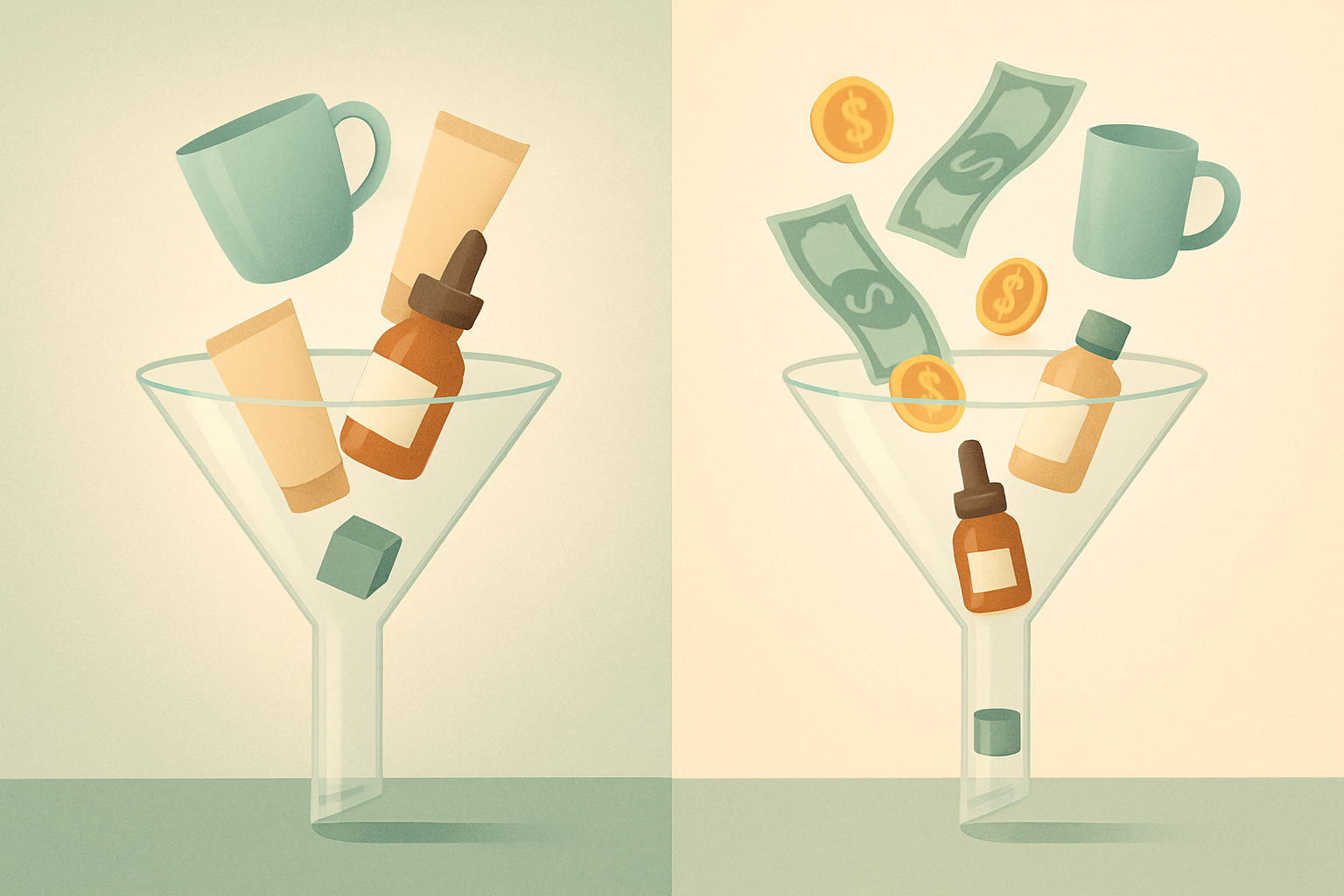
When you search "best running shoes" or scroll a store's "Top Picks," something decided which product lands at the top. It rarely tells you what. So how do product rankings work, really? The short answer: the order you see is a blend of relevance, popularity, and money — and the money part is usually invisible. Some results are paid ads. Some are sorted to maximize a retailer's profit. Some genuinely reflect quality. Once you can tell those apart, you stop mistaking "ranked first" for "best for me." This is a quick, honest guide to reading any ranked list with clear eyes.
What "ranked first" actually means
A ranking is just an ordering chosen by someone with goals. A search engine wants results you'll click. A retailer wants results you'll buy — ideally the ones that earn it the most. A "best of" site wants results that convert into a sale it gets a cut of. None of those goals is automatically sinister, but none of them is "show this specific person the single best product for their needs," either.
So when you see position #1, the honest question isn't "is this the best?" It's "best at what, for whom, and who decided?"
The forces that set the order
Almost every product ranking you meet is some mix of four ingredients.
Paid placement (ads)
The most direct one. On most marketplaces and search engines, the top slots — and several scattered through the list — are bought. They're often labeled "Sponsored" or "Ad," sometimes in faint gray text. A sponsored result isn't necessarily a bad product; it just got there by paying, not by winning.
Commissions and affiliate cuts
Many recommendation sites earn a percentage when you buy through their links. Wirecutter, for example, runs on affiliate commissions — often in the ballpark of 6-10% of a sale, per an Ahrefs case study. Wirecutter does real, careful testing, so treat this as a good-faith example, not a gotcha. Still, commissions create a quiet pull toward products that pay and toward "buy it now." We dug into that dynamic in how affiliate marketing shapes recommendations.
Popularity and other signals
Rankings lean on sales volume, star ratings, review counts, recency, and click-through. Useful — but gameable. Researchers estimate that roughly a third of online reviews may be unreliable or fake, which means "4.6 stars, 12,000 reviews" isn't the proof it looks like. The US FTC even banned fake and incentivized reviews in a 2024 rule — a fair sign of how common the problem got.
The platform's own profit
Retailers increasingly boost their own house brands and high-margin items, so "Recommended for you" can quietly mean "recommended for our margins." The same goes for influencer "favorites" — some are heartfelt, some are paid placements wearing the costume of a personal tip.
Sponsored vs. organic: how to tell them apart
"Organic" results earn their spot through relevance and signals; "sponsored" ones are paid. The catch is that the line is blurred on purpose. A few habits help:
- Hunt for the label. "Sponsored," "Ad," "Promoted," "Partner" — usually tiny and low-contrast. If a whole row is ads, the first genuinely earned result may sit well below the fold.
- Watch the sort menu. "Featured" almost never means "best for you"; it means whatever the platform wants up top. Switch to a neutral sort (price, rating, newest) to break the spell.
- Notice repetition. If one brand blankets the top five, you're probably seeing a marketing budget, not a consensus.
- Ask who profits if you click. A free site makes money somehow. If you can't see how, the ranking may be the product.
How to read past the ranking
You don't need to distrust everything — just shift the question from "what's #1?" to "what fits me?"
- Define your needs first. Two or three must-haves — budget, a deal-breaker, how you'll actually use it — turn a ranked list into a filter instead of a verdict.
- Separate quality from order. A great product at #1 and a great product at #14 are both great. Position is a marketing outcome, not a quality score.
- Read the reasoning, not the rank. A trustworthy recommendation tells you why — for your budget, your space, your priorities. "It's popular" isn't a reason that applies to you.
- Verify across independent sources. Most people already do. 2025 YouGov data found that even among shoppers who say they trust AI recommendations, most still double-check. That instinct is healthy — keep it.
Where AI shopping tools fit — and where they don't
AI was supposed to cut through all of this, and sometimes it does. But many AI shopping features are quietly absorbing the same incentives. OpenAI's Instant Checkout in ChatGPT, for instance, charges merchants roughly 4% on completed purchases — which means the assistant now has a stake in what you buy. That doesn't make its answers bad, but it's worth knowing the meter is running.
The honest test for any tool — human or AI — is the same: does its income depend on what you click? If yes, read its rankings the way you'd read a friendly salesperson. Helpful, often right, but interested.
This is the gap Shopi was built to close. It earns nothing when you buy — no ads, no affiliate links, no commissions, no sponsored slots — so there's no hidden hand tilting the order. Recommendations are ranked by fit to your taste, budget, and values, each with a plain "why this is for you" note and a relevance score. When you want the product page, Shopi points you straight to it, with no affiliate tags or commission, and it doesn't handle the transaction. You can see why that's different here. It isn't magic — the AI can still get things wrong, and we'll say so — but at least the ordering is on your side.
Try reading a ranking on your terms
Next time you face a wall of "top picks," do three things: check the sort menu, hunt for the "Sponsored" tag, and ask who gets paid if you click. That alone will change what you buy.
And if you'd like recommendations ranked by fit instead of fees, you can try Shopi free with no signup. The demo runs on a sample shopper profile, so it shows how the reasoning works rather than reading your mind — create a free profile (under two minutes) when you want results tuned to you. Either way: no ads, no affiliate links, no catch.
Frequently asked questions
How do product rankings work on most shopping sites?
They combine four things: paid placement (ads), commissions or affiliate cuts the site earns on a sale, popularity signals like sales and reviews, and the platform's own profit motive (boosting house brands or high-margin items). Relevance to you is only one ingredient, and rarely the deciding one.
What's the difference between sponsored and organic results?
Sponsored results are paid placements — a brand bought that spot, usually marked 'Sponsored,' 'Ad,' or 'Promoted' in small text. Organic results earned their position through relevance and signals like ratings and sales. The line is often blurred deliberately, so look for labels and switch to a neutral sort like price or rating.
Does being ranked #1 mean it's the best product?
No. Position is a marketing outcome, not a quality score. A great product can sit at #14 while a paid or high-commission item sits at #1. Judge a recommendation by whether it fits your specific needs and explains why, not by where it lands in the list.
How can I tell if a recommendation is paid?
Ask how the site makes money. If it runs on ads or affiliate commissions, its rankings have a financial pull. Look for tiny 'Sponsored' or 'Partner' labels, notice when one brand dominates the top results, and treat 'Featured' sorts with suspicion — they reflect the platform's goals, not yours.
Are AI shopping assistants free from these incentives?
Not automatically. Some AI shopping features now charge merchants a fee on purchases — for example, ChatGPT's Instant Checkout reportedly takes about 4% — which gives the assistant a stake in what you buy. The honest test is whether a tool's income depends on your clicks. Shopi's doesn't: it takes no ads, commissions, or sponsorships.
Sources
- Ahrefs — Wirecutter SEO case study (affiliate commissions ~6-10%)
- University of South Florida — study on unreliable/fake online reviews
- US FTC — 2024 rule banning fake and incentivized reviews
- YouGov 2025 — AI shopping assistants: awareness, trust, and verification
- OpenAI — Buy it in ChatGPT / Instant Checkout (~4% merchant fee)